I've ruined a lot of silver jewellery over the years.
Not by wearing it. By storing it wrong. And I say this as someone with a degree from FIT and a decade of designing jewelry professionally — the learning curve on proper silver care was steeper than I expected, and most of it came from my own hard-won mistakes than any classroom.
So if you've ever pulled out a favourite piece to find it looking grey and dull when you could've sworn it was gleaming last month, this one's for you.
Why Silver Tarnishes in the First Place
Before we get into storage solutions, it helps to understand what you're actually fighting against.
Sterling silver is 92.5% pure silver alloyed with other metals — usually copper — to give it strength. Pure silver on its own is too soft to hold a shape well. But that copper content? It reacts with sulfur compounds and moisture in the air, and that reaction produces silver sulfide on the surface of your piece. That's tarnish. That dark, dull, sometimes yellowish film that makes beautiful jewellery look neglected.
It's a chemical reaction, not a sign of poor quality.
And it happens faster than most people realize. Humidity, air pollution, your own skin chemistry, hairspray, perfume, certain foods — all of it accelerates the process. Living in a humid climate like Houston, I've watched silver pieces tarnish within weeks if I leave them sitting out on a vanity. Uncovered, exposed, unloved. It doesn't take long.
The good news is that tarnish is almost entirely preventable with the right storage habits. Let me walk you through exactly what works.
The Golden Rule: Limit Air Exposure
Oxygen and moisture are the primary culprits. So the single most effective thing you can do is store your silver pieces in an environment that limits contact with both.
This means airtight — or close to it.
A standard open jewellery dish on your bathroom counter is probably the worst possible storage option for silver. Bathroom air is humid by nature, steam from showers hangs in the air, and your silver sits there absorbing all of it. Even a pretty dish on your bedroom dresser exposes your pieces to whatever's in the air — seasonal humidity shifts, dust, the perfume you spritzed nearby this morning.
Zip-lock bags work surprisingly well. Not glamorous, I know. But placing individual pieces in small resealable bags with as much air squeezed out as possible genuinely slows tarnishing. I use them for travel all the time. You can find anti-tarnish zip pouches that are specifically lined to absorb sulfur compounds, and those work even better.
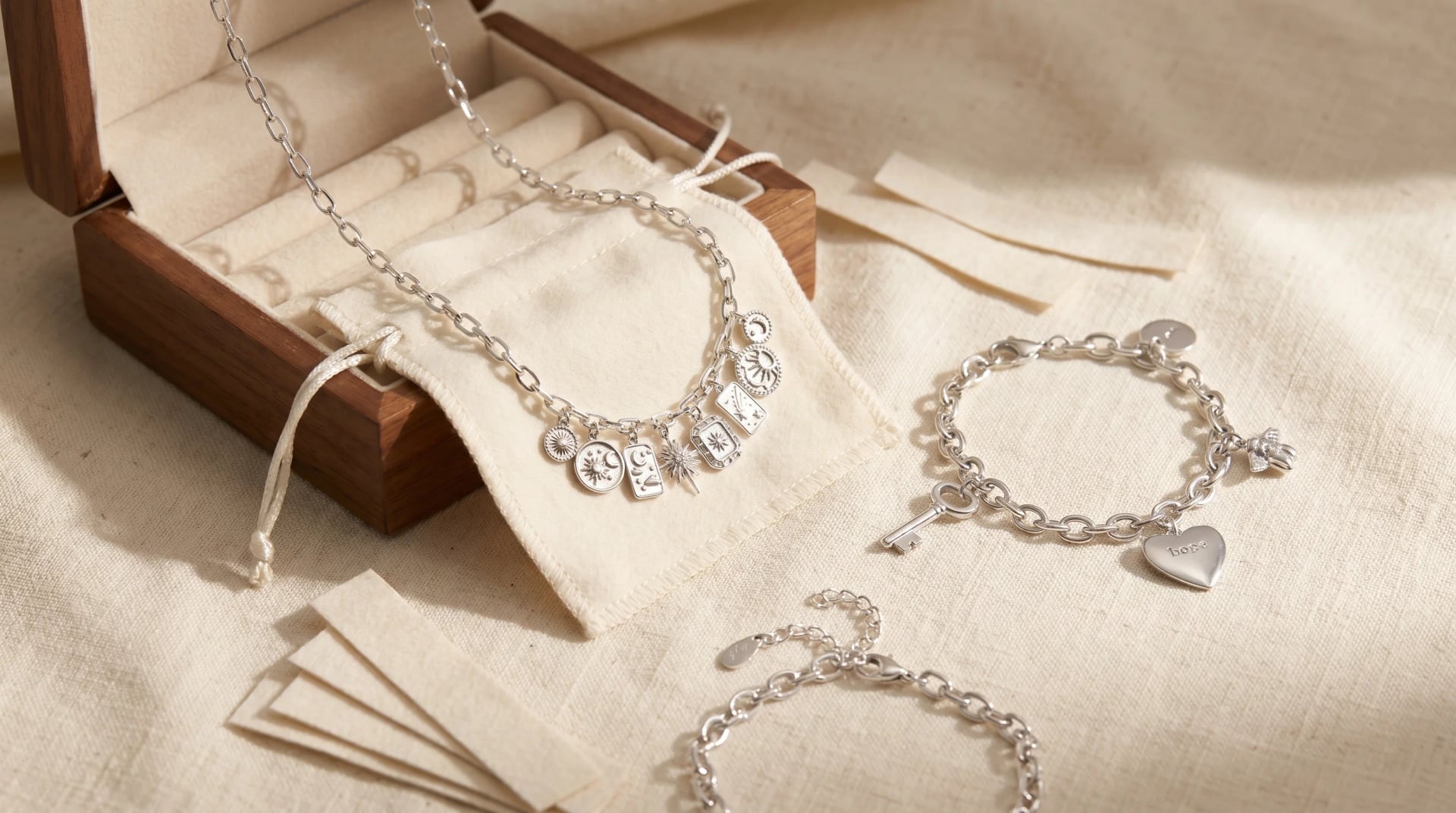
For everyday storage at home, I'd recommend a jewellery box with a fabric lining — specifically, a box lined with anti-tarnish cloth. That lining does real work.
Anti-Tarnish Strips and Pouches
These little things changed my storage game completely.
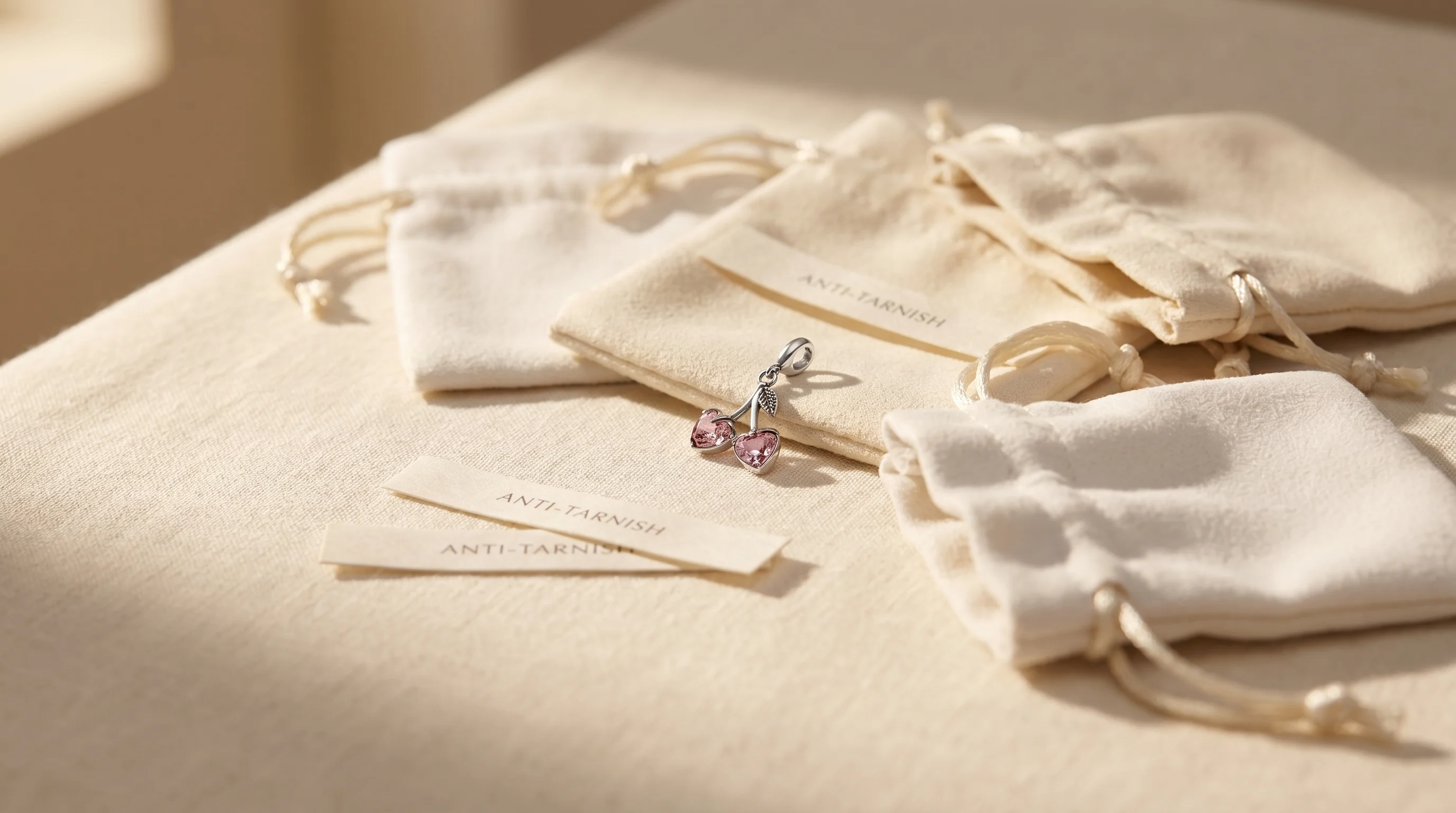
Anti-tarnish strips are small paper-like inserts that you place inside your jewellery storage containers. They absorb the sulfur compounds and moisture that cause tarnish before those compounds can reach your silver. You can find them online for very little, and one strip can protect a small jewellery box for several months.
Silica gel packets are a slightly different tool — they absorb moisture than sulfur specifically — but they help too, especially if you live somewhere humid. Toss a couple of small packets into your jewellery box or storage drawer and replace them every few months.
Anti-tarnish pouches go one step further by wrapping each piece individually. I particularly love these for silver charm bracelets and necklaces with delicate chain links — the kind where tarnish settles into tiny crevices and becomes genuinely difficult to polish out without risking damage to more delicate components.
Store Pieces Separately
This matters more than most people think. And it's not just about tarnish — it's about scratches too.
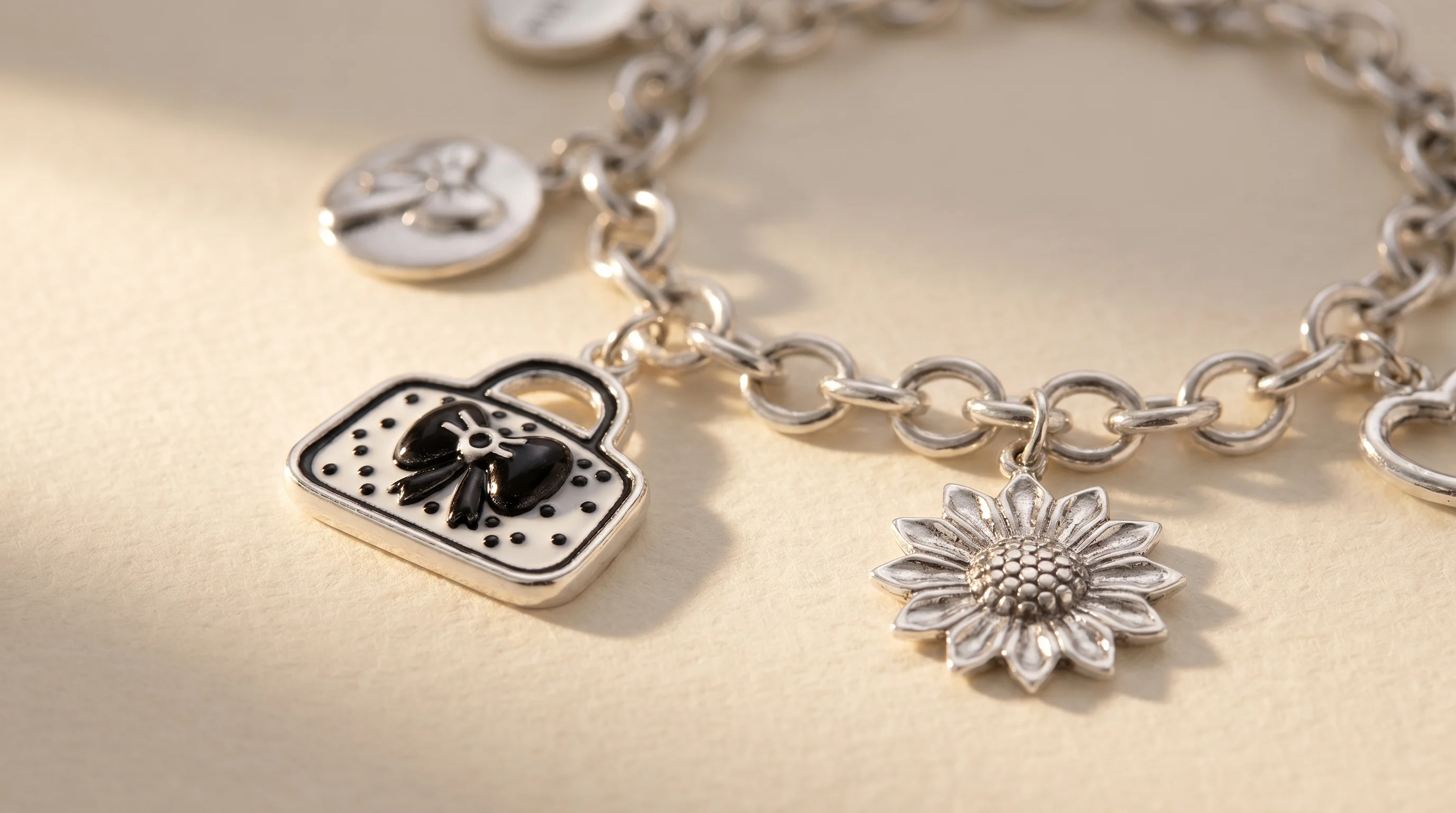
Silver is a relatively soft metal. When pieces tumble together in a drawer or a shared compartment, they scratch each other. Fine chain necklaces tangle. Charms scrape against each other. A 5mm charm pressing against a 12mm pendant overnight leaves marks.
Store each piece individually if you can. Individual pouches, separate compartments, or at minimum a box with dividers. For necklaces especially, hanging storage prevents tangling and keeps chains from kinking — but only if the storage area itself is protected from air.
I have a drawer system where each necklace gets its own small anti-tarnish pouch before going into the drawer. It takes an extra thirty seconds when I take off a piece, and it means I've never once reached for something to find it a tangled, tarnished mess. Thirty seconds of care now versus twenty minutes of detangling and polishing later. Not a hard choice.
The Humidity Factor
If you live somewhere humid — and anyone in the Gulf Coast region knows exactly what I mean — you need to think about this more seriously than someone living in a dry climate.
High humidity dramatically accelerates tarnishing. The copper in sterling silver is particularly reactive to moisture. So even perfectly sealed pouches benefit from that silica gel packet I mentioned, especially during summer months when ambient humidity spikes.
A few things to keep in mind:
Don't store silver jewellery in the bathroom, even in a cabinet. Shower steam permeates everything.
A bedroom with good climate control is better than a humid walk-in closet.
If you have a particularly precious piece you only wear occasionally, a small airtight container with a silica packet is genuinely worth the effort.
Some jewellers recommend a controlled humidity environment of around 35-45% relative humidity for fine silver storage. You don't need to obsess over this, but it tells you something: even slightly humid conditions matter over time.
What to Avoid Storing Near Silver
A few things accelerate tarnishing that you might not expect.
Rubber. Rubber bands, rubber-lined drawers, foam with sulfur content — all of these off-gas compounds that react badly with silver. I've seen pieces stored in certain foam-lined cases come out more tarnished than pieces stored loosely in cloth. Check what your storage materials are actually made of.
Wool is another one. Wool contains sulfur naturally and can accelerate tarnishing if silver pieces are stored in direct contact with it. Sounds obscure until you're wrapping a bracelet in a cozy sweater for travel and wondering why it tarnishes faster than usual.
Newspaper? No. The ink contains sulfur compounds.
Cotton, velvet, and specially treated anti-tarnish cloth are your friends. Plain, clean, dry cotton is a perfectly decent option if you don't have anything more specific on hand.
Cleaning Before You Store
Here's something I remind myself to do and sometimes forget: clean your jewellery before you store it, not just after you've noticed tarnish.
Skin oils, sweat, lotion residue, and perfume all stay on your jewellery after you take a piece off. Those residues interact with air and accelerate tarnishing during storage. A gentle wipe-down with a soft dry cloth before putting a piece away removes most of that surface residue and genuinely extends the time before you'll need to polish.
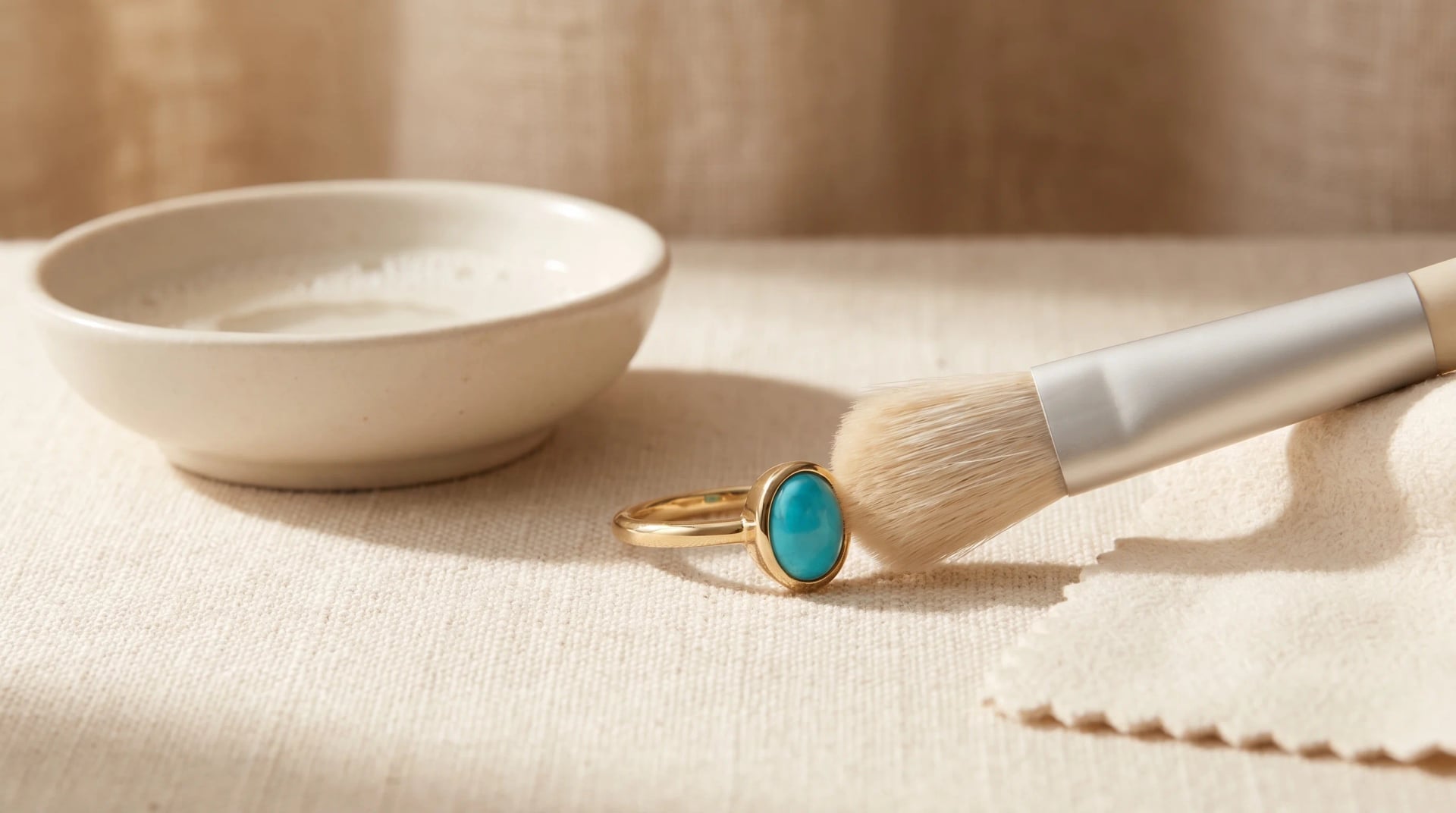
For a deeper clean, mild dish soap diluted in lukewarm water, a soft toothbrush for crevices around charm settings, and a thorough rinse followed by complete air-drying before storage. Storing a piece while it's still even slightly damp is one of the fastest ways to encourage tarnish.
Let it dry completely. Completely. Not mostly dry with a little moisture still in the chain links. Completely.
Long-Term Storage for Pieces You're Not Wearing
Maybe you have a piece you love but only bring out for special occasions. A gift you're saving for someone. Something inherited that you're not ready to wear yet but want to keep safe.
For longer-term storage — months than days — the approach should be more deliberate.
First, clean the piece thoroughly as described above. Then dry it completely. Place it in an anti-tarnish pouch, seal it, and place that pouch inside a small airtight container — a tin, a lidded glass jar, or an actual airtight jewellery case — with a fresh anti-tarnish strip and a silica gel packet inside. Label it with the date so you know when to check the anti-tarnish strip (most need replacing every 6-12 months in storage conditions).
Store that container somewhere cool, dry, and dark. Light doesn't directly cause tarnish, but UV exposure can affect some finishes over time, and cool temperatures slow chemical reactions generally.
This sounds like a lot of steps. It takes about five minutes. And a piece stored this way can come out looking exactly as it did when you put it away, even a year later.
A Word About Silver-Tone Jewellery
Not everything marketed as silver is sterling silver, and storage care varies slightly depending on what you're actually working with.
Sterling silver (marked .925) is a precious metal with specific reactivity. Silver-tone pieces — pieces with a silver-colored plating or finish over a base metal — are a different category. At Enleira, I'm always transparent about materials: when a piece is silver-tone than sterling, we say so clearly.
Silver-tone plated pieces are generally less prone to tarnishing from sulfur compounds in the same way sterling is, but the plating itself can wear away over time with friction and improper storage. The same principles apply — store separately, keep dry, use soft materials — but you're protecting the plating layer from wear than primarily fighting a chemical reaction.
If you're not sure what metal your jewellery is, the care rules that protect sterling silver will never hurt a silver-tone piece. Gentle handling, separate storage, dry conditions. You can't go wrong being careful.
Making Good Habits Stick
Here's what I've found actually works in daily life, not just in theory.
Keep a small soft cloth near wherever you take off your jewellery at night — on the nightstand, on the dresser, wherever. The moment you take a piece off, give it a quick wipe. Thirty seconds. Then into its pouch or compartment. This single habit does more for the long-term appearance of your silver than any cleaning product I've ever tried.
Make it easy on yourself. If the storage solution is complicated or inconvenient, you won't use it consistently. A beautiful jewellery box you actually enjoy opening, anti-tarnish pouches that live right next to where you take off your jewellery, a cloth that's always within reach. Systems work when they fit naturally into your routine.
And if you do find a piece has tarnished despite your best efforts? It's not ruined. A good silver polishing cloth can remove light tarnish in minutes. A paste of baking soda and water handles more stubborn cases gently. For detailed pieces with lots of detailing around charm settings or in chain links, a professional clean from your jeweller is always worth it than scrubbing aggressively yourself.
The Pieces Worth Protecting
I design jewellery to be worn and loved. But I also design it to last — and the truth is that even the most thoughtfully made piece won't survive years of careless storage without showing it.
Your silver jewellery tells your story. The charm you picked up on a trip you'll always remember. The bracelet that marks something you got through. The piece someone gave you because they knew exactly what it would mean.
Those things deserve five minutes of care. Proper storage isn't precious or complicated. It's just respect for something you love.
And once you build the habit, you'll never open your jewellery box to a tarnished surprise again. That I can promise you.

Ariel Garvey
Ariel Garvey is the founder and lead designer of Enleira. She handcrafts every piece from her studio in Sugar Land, Texas, drawing on a deep love of meaningful design and ethical sourcing. When she isn't at the bench, you'll find her going live on TikTok, connecting with her community one charm at a time.